Concrete Patio vs Pavers in Austin TX: Cost, Durability, and Long-Term Value
Choosing the right surface for your patio is one of the most important decisions you will make for your outdoor space. In Austin, TX and surrounding areas, homeowners often compare concrete patios and paver patios. Both materials offer visual appeal and functional performance, but they differ in cost, installation process, maintenance needs, and long-term durability.
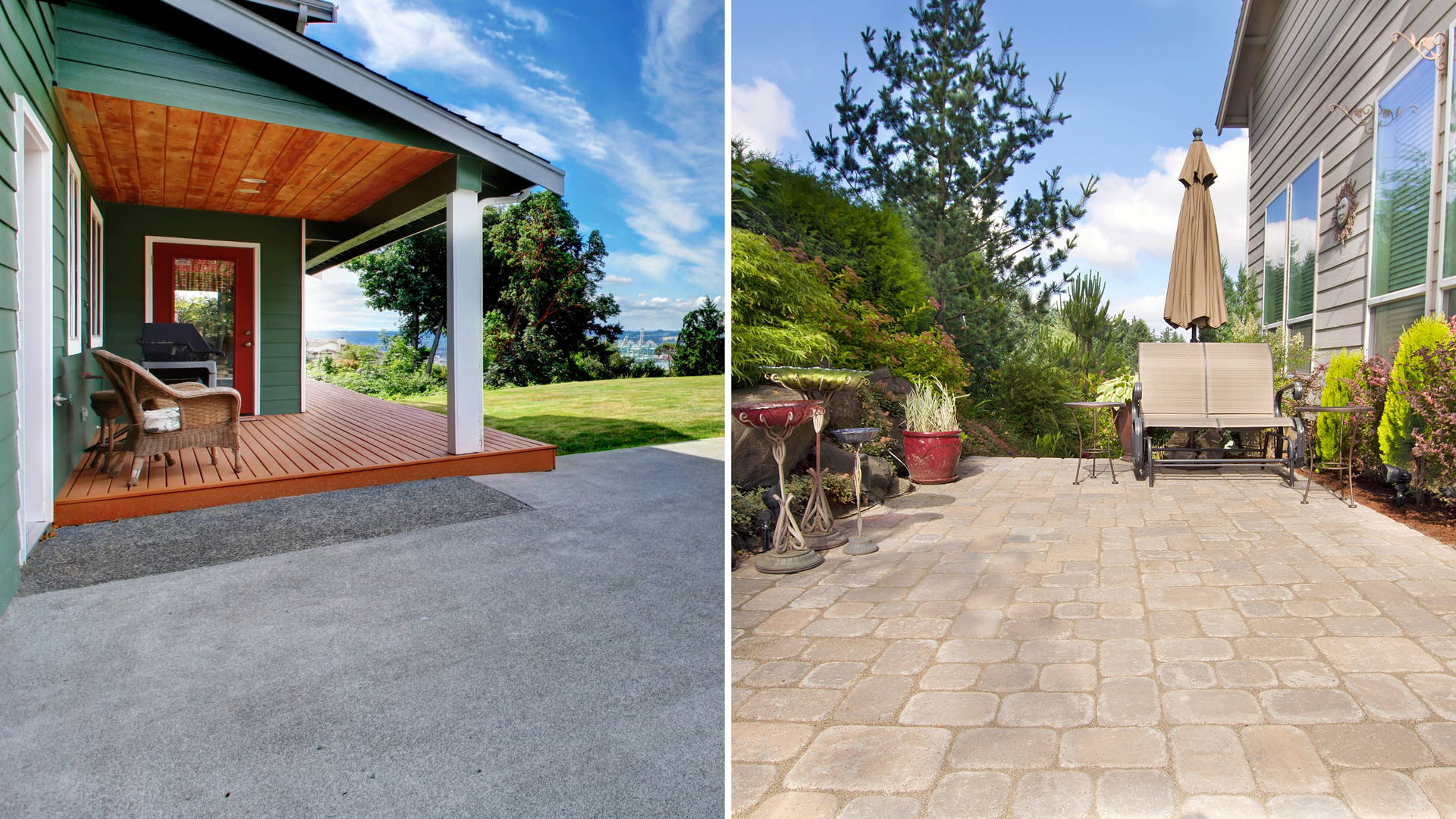
If you are planning a new patio, this guide will help you understand the real differences between concrete and pavers so you can make a well-informed decision based on your budget, lifestyle, and property conditions.
For a broader overview of concrete options for residential properties, visit The Ultimate Homeowner Guide to Residential Concrete Services in Austin, TX.
Why This Decision Matters in Austin
Austin’s soil and climate directly affect patio performance. Much of the area sits on clay-based soil that expands and contracts with moisture changes. Summers bring extended heat, and heavy rainfall can occur during certain seasons.
Because of these conditions, the surface you choose must handle:
- Soil movement
- Drainage challenges
- Sun exposure
- Daily foot traffic
- Outdoor furniture loads
Both concrete and pavers can perform well when installed properly. The key differences lie in structure, flexibility, maintenance, and cost.
What Is a Concrete Patio?
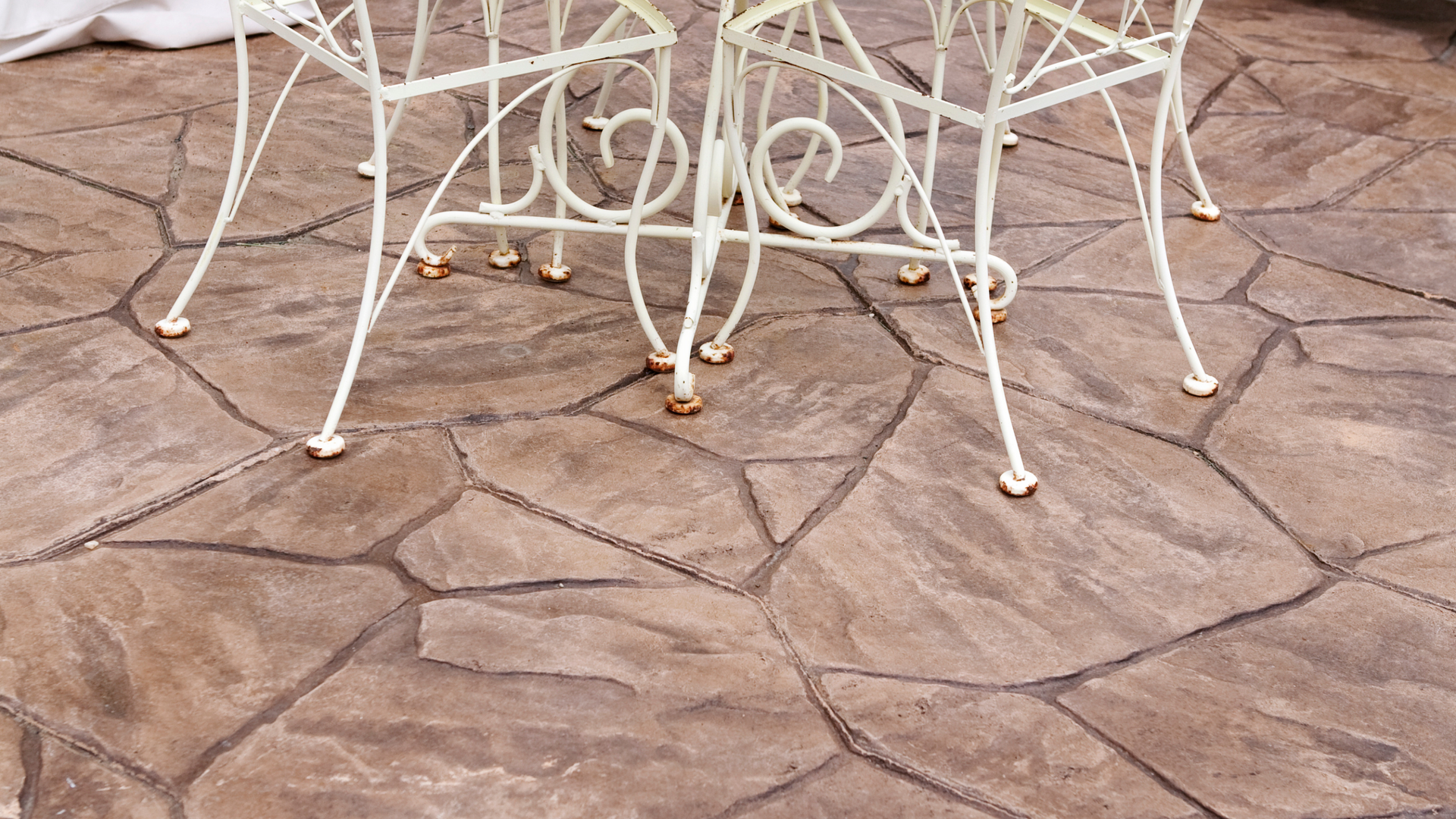
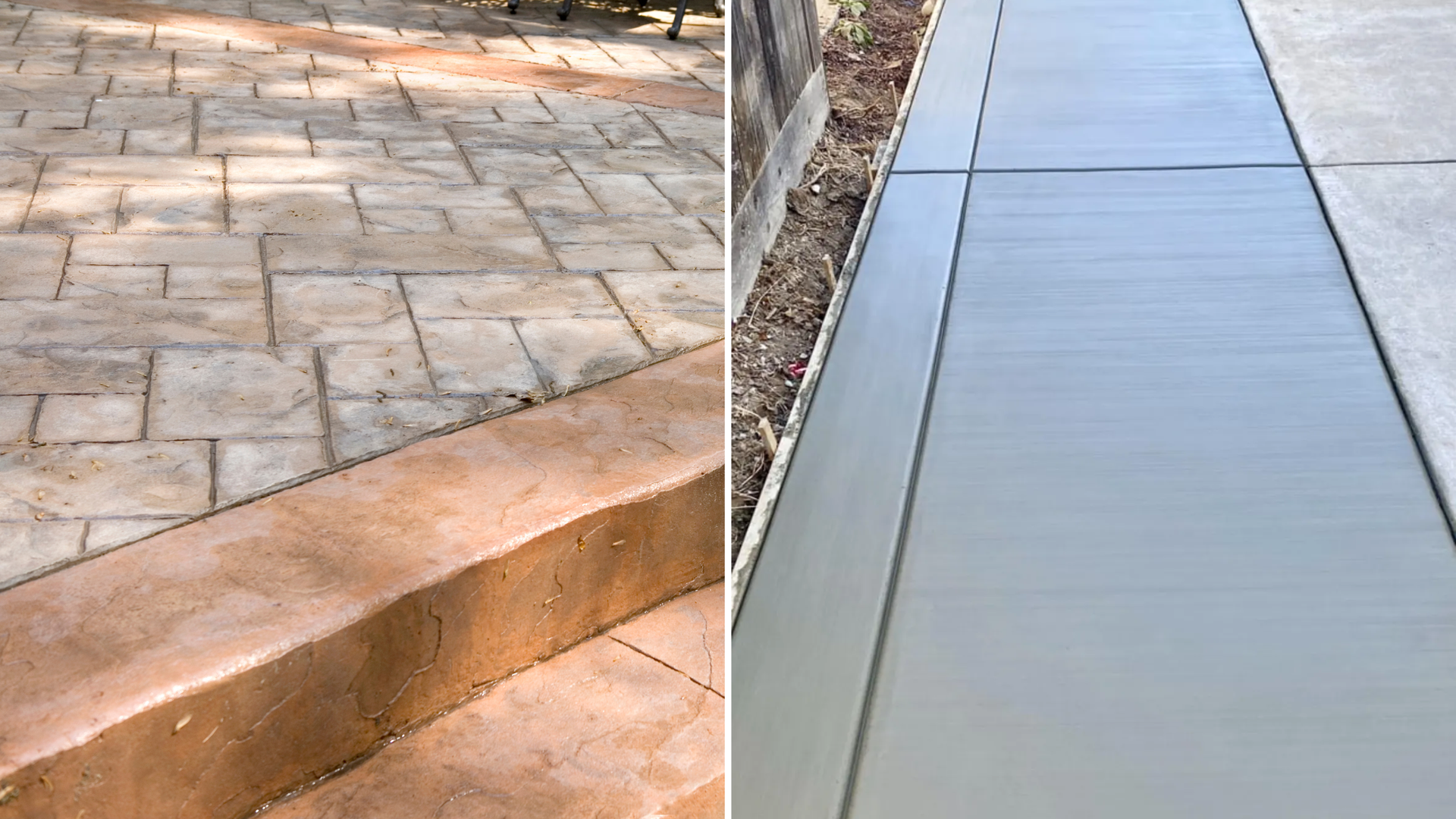
A concrete patio is a single, continuous slab poured over a compacted base. It can be finished in several ways, including broom finish, smooth finish, colored concrete, or stamped decorative patterns.
You can explore our concrete patio services to see how different finish options are applied for residential properties in Austin.
How Concrete Patios Are Installed
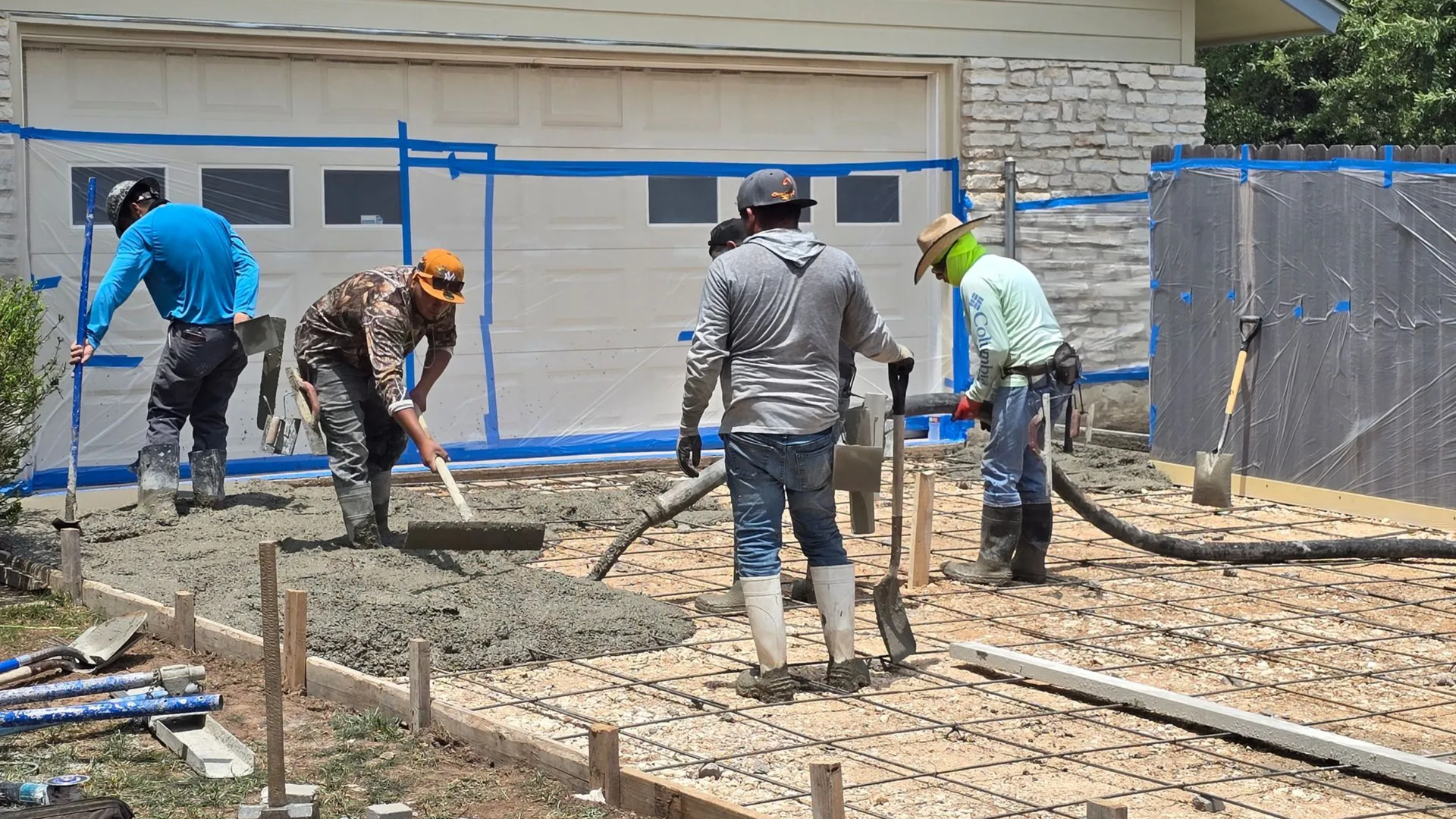
Concrete installation typically includes:
- Site preparation and grading
- Base compaction
- Form setting
- Reinforcement placement
- Concrete pour and finishing
- Curing and sealing
The result is a solid surface with minimal joint lines and consistent structure.
What Is a Paver Patio?
Paver patios consist of individual concrete, brick, or stone units placed over a compacted base with sand between joints. Each unit is separate, allowing some flexibility in the surface.
How Paver Patios Are Installed
Paver installation includes:
- Excavation
- Base preparation
- Sand layer placement
- Individual paver installation
- Joint sanding and compaction
Because the system relies on multiple units rather than one slab, the surface can shift slightly over time.
Cost Comparison: Concrete Patio vs Pavers in Austin
Cost is one of the most common deciding factors for homeowners. Pricing varies depending on size, design complexity, and site conditions.
Patio Cost Comparison Table
| Feature | Concrete Patio | Paver Patio |
|---|---|---|
| Typical Cost Per Sq Ft | $18–$40 | $30–$60 |
| Decorative Options | Stamped, colored, textured | Pattern layouts, mixed colors |
| Installation Time | Moderate | Longer due to individual placement |
| Base Requirements | Compacted subgrade and base | Compacted base plus sand bedding |
| Repair Cost | Section patching | Individual paver replacement |
Concrete patios generally cost less upfront than pavers for comparable square footage. Decorative stamped finishes increase the price but often remain competitive with mid-range paver systems.
Durability and Structural Performance
Durability depends more on proper installation than material alone. However, there are structural differences worth considering.
Concrete Patio Durability
A well-installed concrete patio can last 25 years or longer. Performance depends on:
- Proper reinforcement
- Correct thickness
- Stable base preparation
- Effective drainage
- Periodic sealing
Concrete offers strong load support and does not shift when the base remains stable.
For homeowners comparing decorative finishes, you can review Stamped Concrete vs Brushed Concrete in Austin TX to better understand finish performance.
Paver Patio Durability
Pavers can also last decades, but their performance depends heavily on base integrity and joint maintenance. Individual units may shift if:
- The base settles
- Water washes out joint sand
- Heavy loads exceed design limits
The benefit of pavers is that damaged units can be replaced individually without replacing the entire surface.
Soil Movement in Austin: Which Performs Better?
Austin’s clay soils expand when wet and shrink during dry periods. This movement can affect patios.
Concrete slabs may develop cracks if soil movement is significant. However, properly placed control joints and reinforcement help manage cracking.
Pavers can adjust slightly because they are separate units. However, severe soil movement may still cause uneven settling or joint separation.
In areas with heavy soil movement, professional site preparation is critical regardless of material choice.
Maintenance Requirements
Maintenance often influences long-term satisfaction.
Concrete Patio Maintenance
Concrete maintenance typically includes:
- Occasional cleaning
- Sealing every 2 to 3 years for decorative finishes
- Monitoring drainage
- Minor crack repairs if needed
Stamped concrete requires sealing to preserve color and surface detail.
According to Concrete Network, regular cleaning and sealing significantly extend the lifespan and appearance of decorative concrete surfaces.
Paver Patio Maintenance
Paver patios require:
- Joint sand replenishment
- Weed control between joints
- Occasional leveling
- Cleaning and sealing if desired
Weeds and ant activity are common concerns with paver installations.
Design Flexibility and Appearance
Both options offer design flexibility, but in different ways.
Concrete Design Options
Concrete can be:
- Stamped to resemble stone or wood
- Colored with integral pigment
- Finished with decorative borders
- Textured for slip resistance
Because it is a single surface, the final appearance is consistent and uniform.
Paver Design Options
Pavers allow:
- Multiple color combinations
- Custom layout patterns
- Mixed material designs
- Curved layouts
However, design options depend on available paver styles and manufacturer selections.
Lifespan Comparison
| Material | Average Lifespan | Maintenance Impact |
|---|---|---|
| Concrete Patio | 25–30+ years | Sealing extends life |
| Stamped Concrete | 25+ years | Requires periodic resealing |
| Paver Patio | 20–30 years | Joint maintenance required |
Proper installation is the most important factor affecting lifespan.
Installation Variables That Affect Cost
Several factors influence both concrete and paver pricing:
- Patio size
- Accessibility
- Drainage needs
- Excavation depth
- Reinforcement requirements
- Pattern complexity
- Permitting if applicable
Large patios with decorative features increase material and labor costs regardless of surface type.
Repair Considerations
Repair flexibility differs between materials.
Concrete repairs may involve patching or resurfacing. If cracking is widespread, full replacement may be necessary.
Pavers allow individual units to be removed and replaced, which can simplify localized repairs. However, matching older pavers can sometimes be difficult.
When Concrete Is the Better Choice
Concrete may be the better option if:
- You want a lower upfront cost
- You prefer a smooth, continuous surface
- You want decorative stamped options
- You prefer lower long-term maintenance
- You want consistent structural performance
You can also explore our stamped and decorative concrete services if design is a priority.
When Pavers May Be the Better Choice
Pavers may make sense if:
- You want maximum pattern flexibility
- You prefer replaceable individual units
- You are comfortable with joint maintenance
- You are designing intricate layout details
Long-Term Value Considerations
Value depends on:
- Initial installation quality
- Ongoing maintenance
- Aesthetic preference
- Property resale considerations
Both materials can add value when installed professionally and maintained properly.
Making the Right Decision for Your Property
There is no single answer that works for every property. The best choice depends on your budget, design goals, maintenance expectations, and soil conditions.
For most homeowners in Austin seeking a balance between cost, durability, and appearance, professionally installed concrete patios provide strong long-term value.
If you are comparing concrete patios and pavers for your home in Austin, TX or surrounding areas, we can help you evaluate the right option for your property conditions and design goals.
Request a free estimate from JP Concrete today to discuss your patio project.